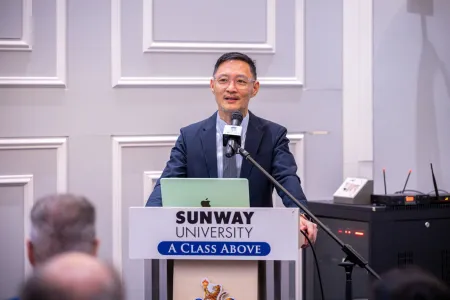

Exploring the Genetics of Sweet Taste Preference

Sweetness is more than just a flavour on our tongues, it’s a complex experience shaped by biology, behaviour, and even our genetic makeup. Our latest publication in Food Quality and Preference, ranked in the top 10% of Scopus-indexed journals, explores how these factors influence sweet taste perception among Malaysians.
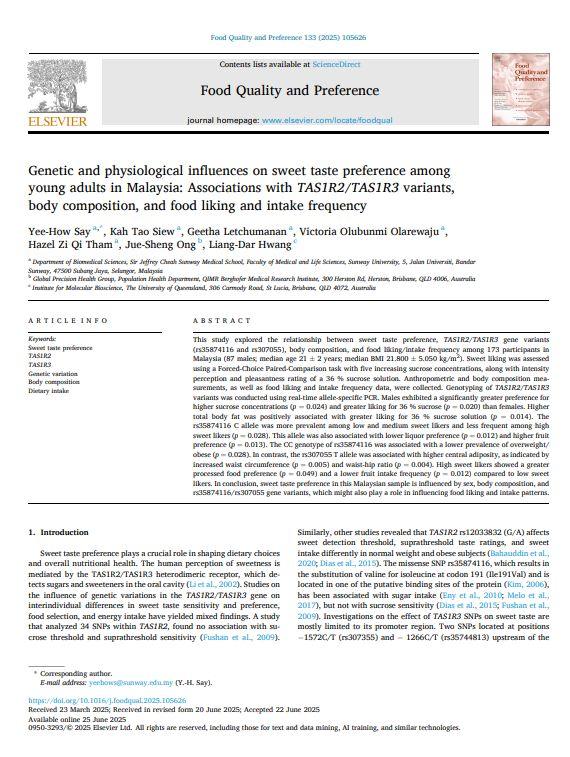
This study formed part of the Final Year Project by Chris Siew Kah Tao, an alumnus of Sunway University’s Biology with Psychology programme. The project was supported by Dr. Yee-How Say’s students, Geetha Letchumanan and Victoria Olarewaju, as well as Hazel Tham Zi Qi, a Sunway College A-levels graduate who interned under Dr. Say and contributed to the genotyping work.
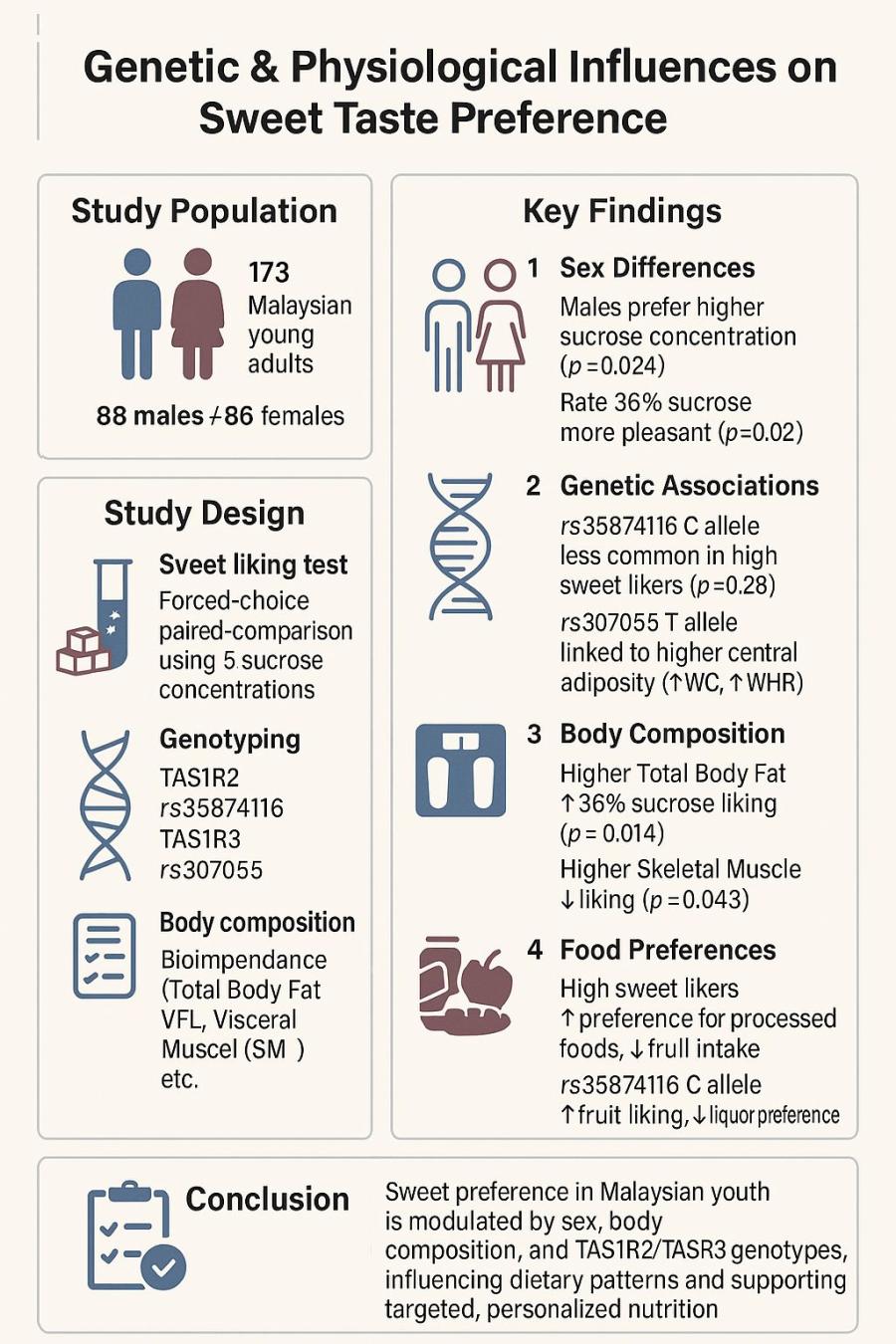
The publication coincides with a landmark paper in Nature detailing the structural and functional characterisation of the human sweet taste receptor (TAS1R2-TAS1R3).

Dr. Yee-How Say is also honoured to contribute to the ManyLabs001 global study on sweet taste preference, under the Global Consortium for Chemosensory Research, through the invitation of Jue Sheng Ong and Daniel Liang-Dar Hwang.
Sunway University remains committed to advancing research at the intersection of taste perception, genetics, and human behaviour.
By continuing to explore how taste, genetics, and behaviour are connected, Sunway University aims to deepen scientific understanding and inspire innovations that can enhance health, nutrition, and overall well-being, one sweet discovery at a time.