

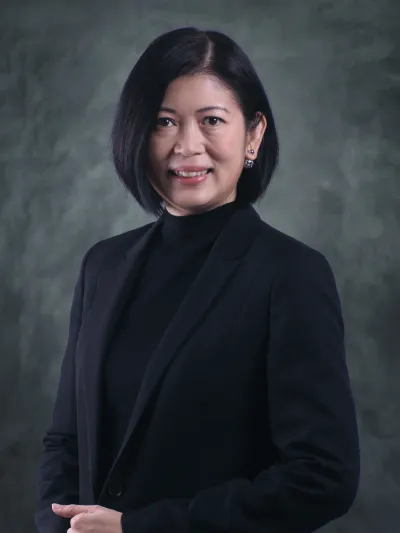
Dr Lim Woan Ning
- Senior Lecturer
Department of Smart Computing and Cyber Resilience
- School of Computing and Artificial Intelligence
Faculty of Engineering and Technology
SDGs Focus




Biography
Dr Lim Woan Ning is a Senior Member of IEEE who received her PhD in Computing from Sunway University, and Master of Engineering in Electrical Engineering and Bachelor of Computer Science (Hons) from Universiti Teknologi Malaysia. She is currently a researcher at the Human-Machine Collaboration Research Centre (HUMAC) and a Senior Lecturer in the School of Computing and Artificial Intelligence, Faculty of Engineering and Technology, Sunway University. Her research interests include human-computer interaction, with a focus on virtual reality and augmented reality, artificial intelligence, and image processing. Her work has been published in multiple Scopus-indexed Q1 journals and international conference proceedings. She also serves as a peer reviewer for high-ranked international journals and conferences in computing and related fields. She has been involved in research projects funded by the Ministry of Higher Education Fundamental Research Grant Scheme (FRGS) and Sunway Internal Research Grants.
Academic & Professional Qualifications
- PhD in Computing, Sunway University, Malaysia (2025)
- MEng in Electrical Engineering, Universiti Teknologi Malaysia, Malaysia (2000)
- BSc (Comp) (Hons) in Computer Science, Universiti Teknologi Malaysia, Malaysia (1998)
Research Interests
- Virtual Reality
- Augmented reality
- Machine Learning
- Image processing
- Artificial Intelligence
- Mobile computing
Notable Publications
- W. N. Lim, Y. Lee, K. M. Yap and C. C. Yen, "Weight Perception Simulation in Virtual Reality with Passive Force using Force Sensing Resistors," 2022 IEEE International Conference on Computing (ICOCO), Kota Kinabalu, Malaysia, 2022, pp. 124-129, doi: 10.1109/ICOCO56118.2022.10031797.
- C. Wee, K. M. Yap and W. N. Lim, "iProgVR: Design of a Virtual Reality Environment to Improve Introductory Programming Learning," in IEEE Access, vol. 10, pp. 100054-100078, 2022, doi: 10.1109/ACCESS.2022.3204392.
- K. W. Tan, W. N. Lim and Y. Lee, "Emotion classification through text with proposed hybrid learning emotion model," AIIPCC 2022; The Third International Conference on Artificial Intelligence, Information Processing and Cloud Computing, Online, 2022, pp. 1-5.
- W. N. Lim, K. M. Yap, Y. Lee, C. Wee and C. C. Yen, "A Systematic Review of Weight Perception in Virtual Reality: Techniques, Challenges, and Road Ahead," in IEEE Access, vol. 9, pp. 163253-163283, 2021, doi: 10.1109/ACCESS.2021.3131525.
- C. C. Hui Fen and W. N. Lim, "Virtual Piano Dynamics Enhancement with Electromyography," 2021 Innovations in Intelligent Systems and Applications Conference (ASYU), 2021, pp. 1-6, doi: 10.1109/ASYU52992.2021.9598948.
- C. Wee, K. M. Yap and W. N. Lim, "Haptic Interfaces for Virtual Reality: Challenges and Research Directions," in IEEE Access, vol. 9, pp. 112145-112162, 2021, doi: 10.1109/ACCESS.2021.3103598.
- X. H. Ng and W. N. Lim, "Design of a Mobile Augmented Reality-based Indoor Navigation System," 2020 4th International Symposium on Multidisciplinary Studies and Innovative Technologies (ISMSIT), 2020, pp. 1-6, doi: 10.1109/ISMSIT50672.2020.9255121.
- W. N. Lim, Y. Lee and I. Anggoro, "Augmented Reality 3D Cubes Puzzle Bingo Game for the Elderly," 2019 IEEE International Symposium on Haptic, Audio and Visual Environments and Games (HAVE), 2019, pp. 1-6, doi: 10.1109/HAVE.2019.8921044.
- Z. H. Sim, Y. Chook, M. A. Hakim, W. N. Lim and K. M. Yap, "Design of Virtual Reality Simulation-based Safety Training Workshop," 2019 IEEE International Symposium on Haptic, Audio and Visual Environments and Games (HAVE), 2019, pp. 1-6, doi: 10.1109/HAVE.2019.8921366.
- Y. J. Chin, W. N. Lim, and C. S. Lee, “Mobile Game for the Elderly : Bundled Bingo Game,” in IEEE Region 10 Annual International Conference, Proceedings/TENCON, 2017, vol. 2017-Decem, pp. 2262–2267.
- W. Y. Foo, W. N. Lim, and C. S. Lee, “Drawing Guessing Game for the Elderly,” in IEEE Region 10 Annual International Conference, Proceedings/TENCON, 2017, vol. 2017-Decem, pp. 2236–2241.
- W. N. Lim, “Improving Student Engagement in Higher Education through Mobile-Based Interactive Teaching Model Using Socrative,” in IEEE Global Engineering Education Conference (EDUCON), 2017, no. April, pp. 404–412.
- Z. Z. Tan, K. M. Yap, and W. N. Lim, “Flow Control Technique for LR-WPAN Network in Sensors Data Transmission,” in IEEE 13th International Colloquium on Signal Processing & its Application (CSPA), 2017.
- W. N. Lim, K. S. Yap, K. Marzuki, and Y. Rubiyah, “Design of an Automated Data Entry System for Hand-Filled Forms,” in TENCON 2000, 2000, pp. 162–166.
- W. N. Lim, K. Marzuki, and Y. H. Tay, “A Handwritten Character Recognition System Based on Geometrical and Topological Feature Extraction and The Fuzzy Artmap Neural Networks,” in Regional Symposium on Quality and Automation (RESQUA), 2000.
- W. N. Lim, K. Marzuki, and Y. Rubiyah, “Design of an Automated Data Entry System for Handwritten Forms,” in World Engineering Congress (WEC), 1999.


