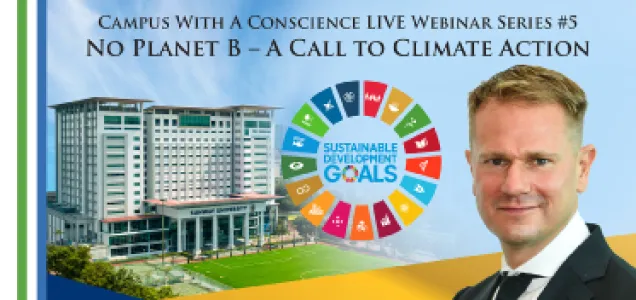
Happening this 28th of July, join us as we discover the importance of our environment and our community. This session features H.E. Dr Joachim Bergström, Ambassador of Sweden to Malaysia, sharing on the topic of “No Planet B – A Call to Climate Action”.
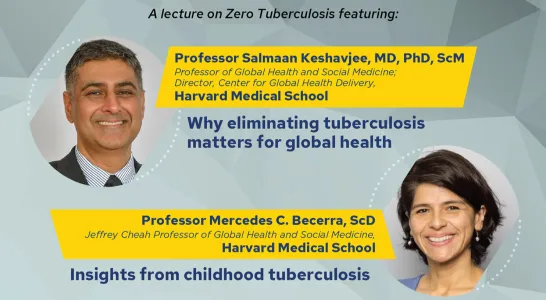
The duo lecture on Zero Tuberculosis: "Why eliminating tuberculosis matters for global health" by Professor Salmaan Keshavjee and "Insights from childhood tuberculosis" by Professor Mercedes Becerra (Harvard Medical School)
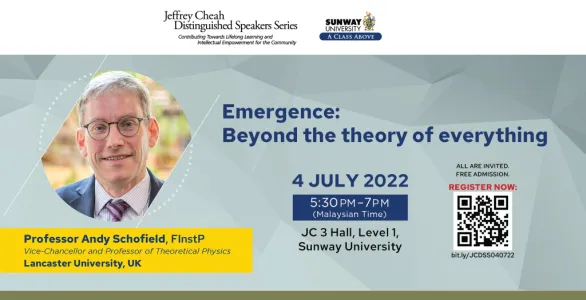
While one branch of physics works to understand the universe by breaking matter down to its fundamental constituents and their interactions (the quest for "the theory of everything"), in a complementary approach it is found that putting matter back together again can lead to a richness of novel…
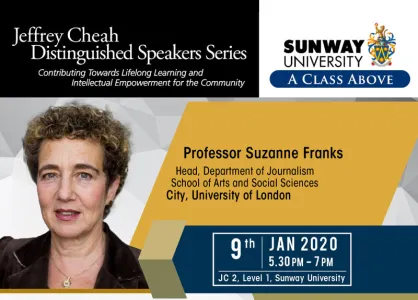
Disseminating news used to be managed exclusively by media hierarchies. The elites had control of the organisations and crucially the means of distribution. Readers and viewers were essentially a passive audience. But, now the digital revolution has changed all of that.
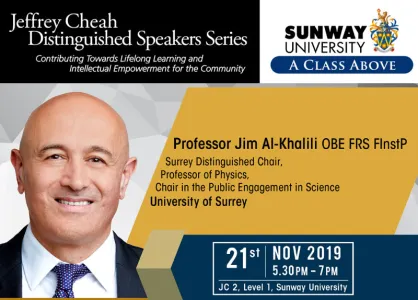
Quantum Mechanics is the most powerful and at the same time strangest theory in all of science. It underpins much of physics and chemistry, and without it we would not have developed modern electronics.
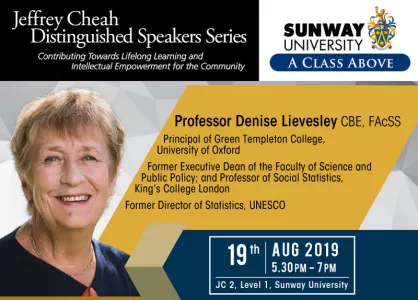
In this lecture, Professor Denise Lievesley will draw on her experience of working as a statistician in the UN system to discuss the problems of gathering harmonised data from across countries with very different levels of statistical expertise and resources.
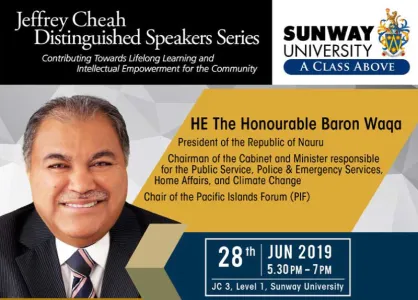
The challenges of Small Island Developing States (SIDS) in the face of climate change are well-documented. Some challenges derive from their geophysical nature, including small land mass, low elevation and high exposure to climate-related disasters.
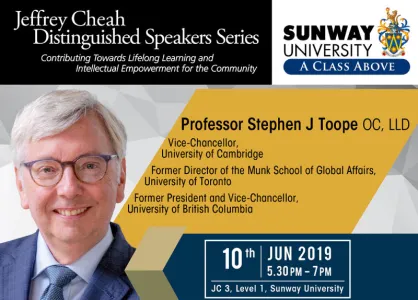
We live in times of unprecedented complexity. The challenges we face are global, yet responses have been muted and insular. In this lecture, Professor Toope will argue that critical thinking and collaboration, across borders, disciplines and institutions, have never been more crucial than they are…
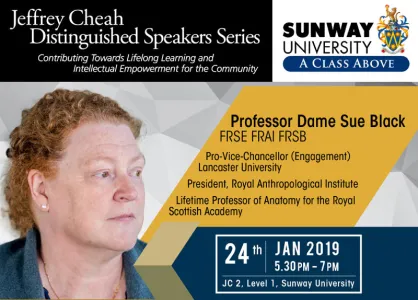
Step changes in research tend to occur at the intersections of different disciplines. This lecture will chart the course of an entire award-winning investigative process that originated from such an opportunistic incident.
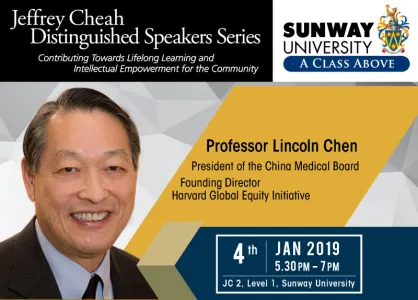
Education of health professionals can create “experts” or even “professionals.” But how can medical professionals be transformed as social change leaders in shaping the health care system?


 +6 (03) 8966 5910

