


Made to Be Seen: Rethinking Game Art Education
What Makes a Good Game Art Curriculum?
Education is increasingly expected to keep pace with the world outside the classroom. Industries change, technology moves quickly, and the way people work continues to evolve. In Malaysia, much of the current conversation around higher education has centred on this question of relevance: how do we prepare students not only for the jobs that exist today, but also for an industry landscape that may look quite different by the time they graduate?
For universities, this creates a difficult balance. Curriculum needs to remain current, but simply adding newer software or responding to every emerging trend is not enough. What students learn should still be useful when the tools change. They need a foundation that allows them to adapt, make decisions and continue learning beyond the university.
Game development makes this challenge particularly visible.
The industry moves quickly. Software changes, production pipelines evolve and new technologies regularly reshape parts of the development process. Students entering game art today may eventually work with tools that are very different from the ones they first encountered in university.
So, the question is not simply what software we should teach. It is what kind of game artist we are trying to develop.
Beyond Software and Technical Skills
Drawing, 3D modelling, texturing, animation, game engines and digital production tools all matter. Students need to be technically capable, and there is no shortcut around building those skills.
But knowing how to operate the software is only part of the work.
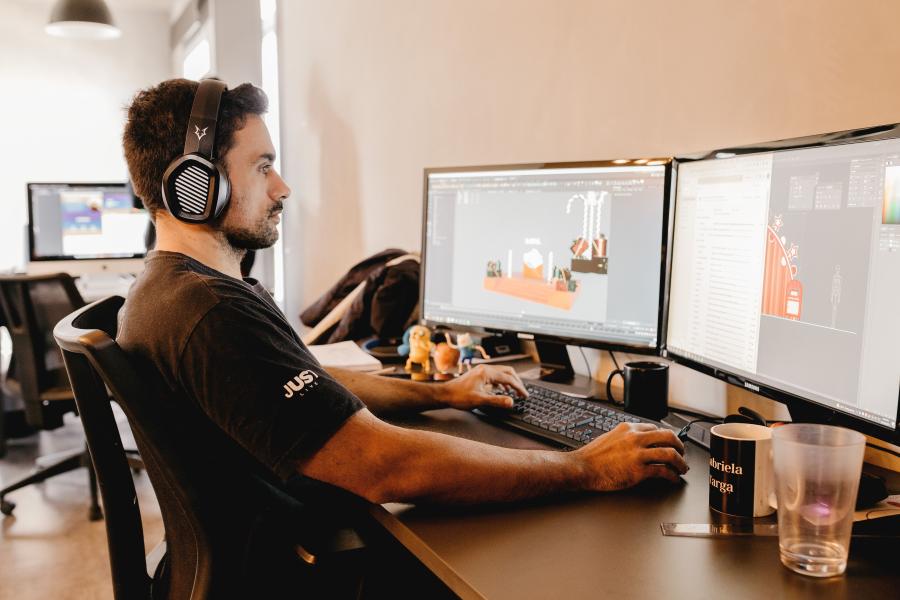
This is becoming even more important as AI begins to enter creative production workflows. Some tasks that once required a great deal of manual effort can now be accelerated, assisted or approached differently. That can be useful, but it also changes what students need to understand. If a tool can generate options quickly, students still need to know which option is appropriate, what needs to be changed and whether the result actually supports the intended creative direction.
In that sense, AI does not make artistic judgment less important. It makes it more visible.
A student modelling a character, for example, has many decisions to make beyond topology and technical execution. Does the character communicate the intended personality? Does the silhouette work? Does it belong in the visual world of the game? Will the design still function once it is animated?
The same thinking applies to environments, props, animation and interface design. The technical process supports the outcome, but it should not become the outcome itself.
This is why curriculum design cannot stop at asking which software packages students should learn. The more useful question is what students should be capable of making, solving and communicating through those tools, even as the tools themselves continue to change.
Giving Students a Reason to Create
There is another issue that is easy to overlook: what happens to the work after students finish making it?
A typical assignment has a very clear life cycle. Students receive a brief, complete the work, submit it, receive their marks and move on. That process is necessary, but if every project ends at the submission folder, it can create a very limited idea of what creative work is for.
Game art does not normally exist in isolation.
A character is designed for somebody to see and understand. An environment is built to be navigated. An animation has to communicate movement, weight or personality. Even a small prop can tell the player something about the world they are in.
That changes how students should experience their own work.
If they know that a project will eventually be displayed, tested or seen by other people, they start making different decisions. Details that might have been “good enough for submission” suddenly become more noticeable. They begin thinking about presentation, clarity and how another person might respond to what they have made.
The question is no longer only, “Have I completed the assignment?” It becomes, “Would I be comfortable showing this to someone?”
That small difference can have a surprisingly large effect on the way students approach their work.
Bringing the Audience Into the Curriculum
This is where events can become genuinely useful to learning.
Game showcases, game jams, live art challenges, playtesting sessions, portfolio reviews and industry talks are often placed outside the formal curriculum. They are seen as additional activities, which can be valuable, but separate from what happens in class.
They do not necessarily have to be separate.
A project developed during a course could later be exhibited at a showcase. A prototype might be tested by visitors during a game event. Students could participate in a live art challenge where the time limit and unfamiliar brief force them to approach their usual process differently. A portfolio review might reveal that something which worked well for an assessment still needs improvement when seen from an industry perspective.
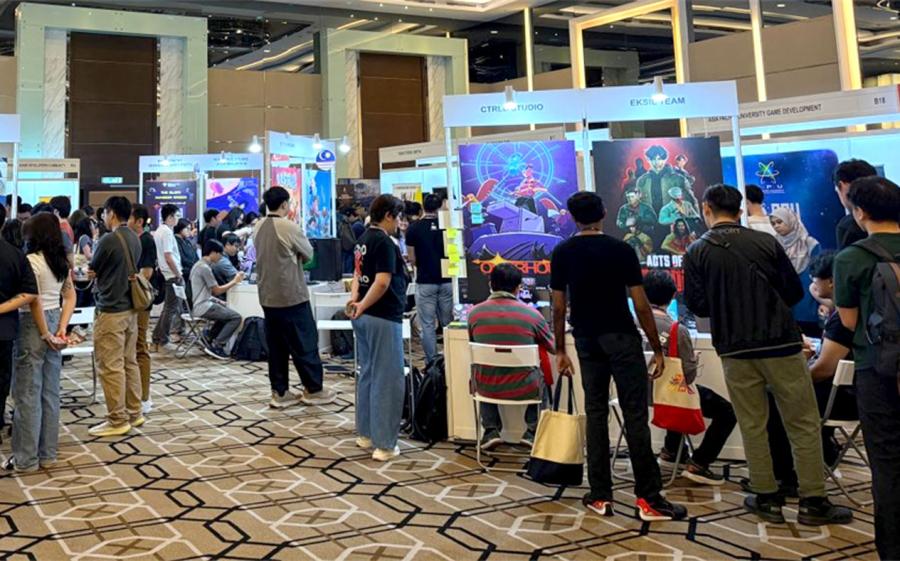
These situations give students something that lecturers cannot fully reproduce inside a normal classroom: a real response from another person.
Sometimes that response is encouraging. Sometimes it is uncomfortable. A player may not understand something the student thought was obvious. An industry reviewer may focus on a weakness the student had not noticed. A classmate may interpret the work in a completely unexpected way.
Those moments are useful because they make the work feel real.
An event, then, does not have to sit at the end of the curriculum as a celebration of finished work. It can be part of the learning process itself.
Creating Work That Lives Beyond the Classroom
A good game art curriculum should certainly teach students how to make things well. Technical ability matters. Artistic foundations matter. So do creative thinking, visual communication and an understanding of how game production works.
But perhaps the better measure of a curriculum is what students are able to do once these things come together.
Can they take an idea and develop it into something convincing? Can they explain the decisions behind their work? Can they respond when something does not work as expected? Can they take feedback, make changes and improve the result?
Those abilities are harder to tie to a single software package, which is precisely why they matter.
The tools students use today will continue to change. The ability to think through a creative problem, make informed choices and adapt their work will remain useful much longer.
For that reason, a strong game art curriculum should do more than help students complete assignments and learn production tools. It should give them reasons to care about what they make, opportunities to see how others respond to it and enough room to improve before moving on.
And ideally, by the time students leave the classroom, they are no longer making work simply because it has been assigned.
They are making work because they believe it is worth showing.
Muhamad Ayman Jamaludin
School of Architecture and Design, Faculty of Arts & Social Sciences
Email: @email


