


The Rise of Intelligent Electronics: AI’s Role in Shaping the Future of The Chip
Introduction: The Backbone of Modern Technology
Semiconductors form the foundation of modern electronic systems, powering everything from smartphones and medical devices to renewable energy infrastructures and autonomous vehicles. As global demand for faster, smaller, and more efficient devices increases, the semiconductor industry is undergoing a significant transformation. One of the most influential drivers of this change is artificial intelligence (AI), which is reshaping the design of electronic systems, manufacturing processes, and system optimization.
Manual Design to Intelligent Assistance
In the early stages of semiconductor development, chip design and manufacturing processes were largely manual and relied heavily on human expertise. Engineers performed complex calculations and design iterations using rule-based tools. While early Electronic Design Automation (EDA) tools improved efficiency, they were limited to predefined logic and lacked adaptability.
The introduction of AI marked a turning point. Machine learning algorithms began to assist engineers by analysing large datasets, identifying patterns, and suggesting optimised design solutions. In manufacturing, AI-enabled systems were gradually adopted for defect detection and yield optimisation, improving both quality and production efficiency.
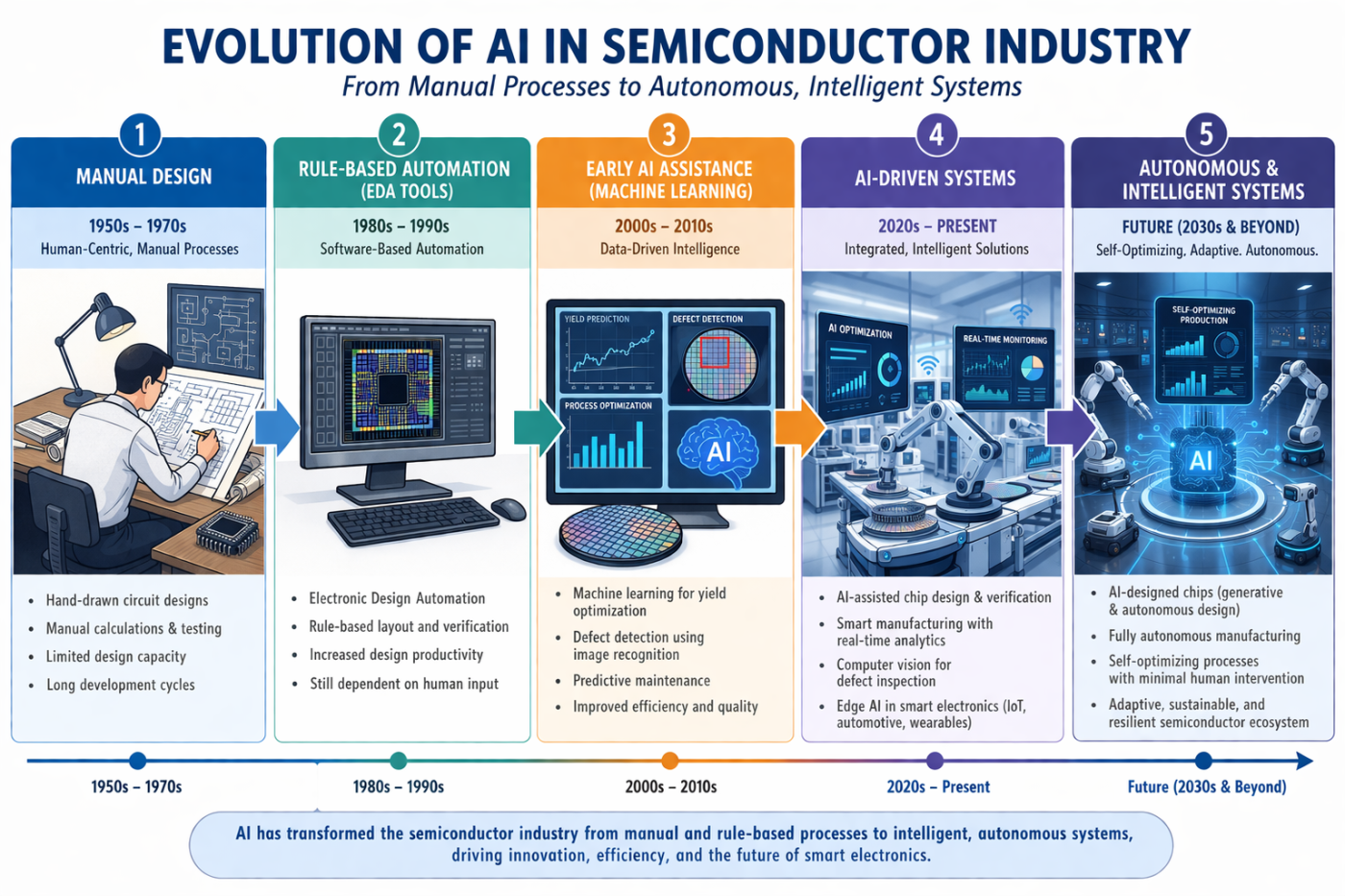
As shown in Figure 1, the evolution of the semiconductor industry reflects a clear transition from manual processes to automation and, more recently, to intelligent AI-driven systems.
The Current Era: AI as a Core Enabler
Today, AI has become a central component of the semiconductor ecosystem. In chip design, AI tools can rapidly explore multiple design configurations, significantly reducing development time while improving performance and energy efficiency. AI is also used in verification processes to detect design flaws early, minimising costly errors.
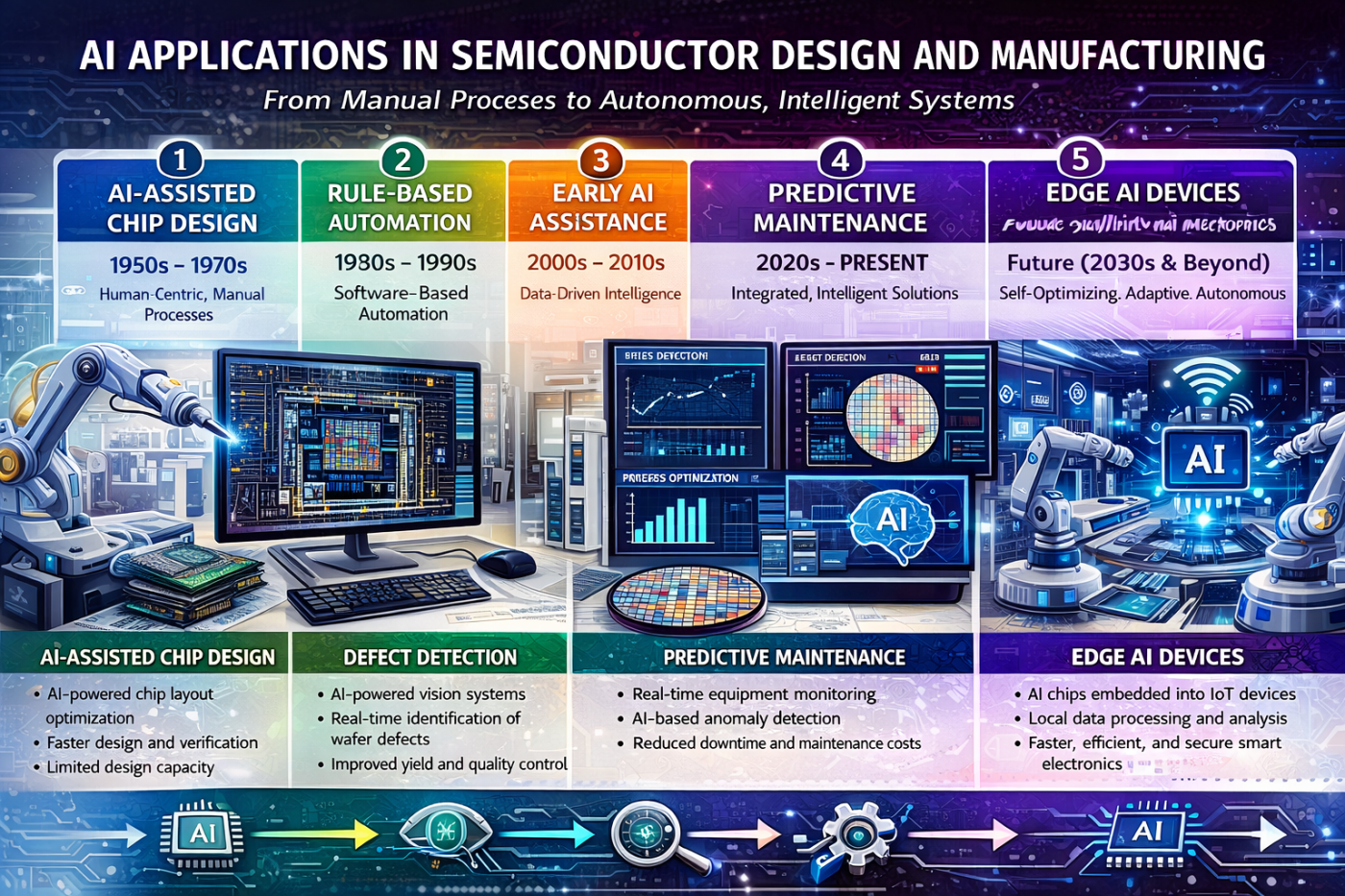
In semiconductor manufacturing, AI plays a critical role in smart factories. Advanced vision systems powered by AI can detect microscopic defects on wafers with high accuracy, while predictive maintenance systems analyse equipment data in real time to reduce downtime and improve operational reliability. These applications are highlighted in Figure 2, which demonstrates the embedment of AI across both design and manufacturing stages.
Beyond manufacturing, AI is increasingly integrated directly into electronic devices. Edge AI enables smart systems such as Internet of Things (IoT) devices, autonomous vehicles, and wearable technologies to process data locally, enhancing speed, privacy, and efficiency.
The future of AI in electronics and semiconductor industries is expected to be even more transformative. One key development is AI-designed chips, where algorithms autonomously generate optimised architectures, significantly accelerating innovation.
Impact on Industry and Society
The integration of AI into the semiconductor industry is transforming both technology and workforce requirements. Engineers now require interdisciplinary skills combining electronics, data analytics, and AI. In terms of societal perspective, AI-driven systems contribute to more sustainable and efficient technologies, supporting Sustainable Development Goals such as Industry, Innovation and Infrastructure (SDG 9) and Responsible Consumption and Production (SDG 12).
Conclusion: A New Era of Intelligent Engineering
The evolution of AI in the semiconductor industry represents a shift from automation to intelligence. As AI continues to advance, it will play a critical role in shaping the future of electronics. Embracing this transformation is essential for engineers, educators, and industry leaders seeking to remain competitive in an increasingly intelligent technological landscape.
Associate Professor Ir. Dr Ranjit Singh Sarban Singh
School of Engineering
Faculty of Engineering and Technology
Email: @email


